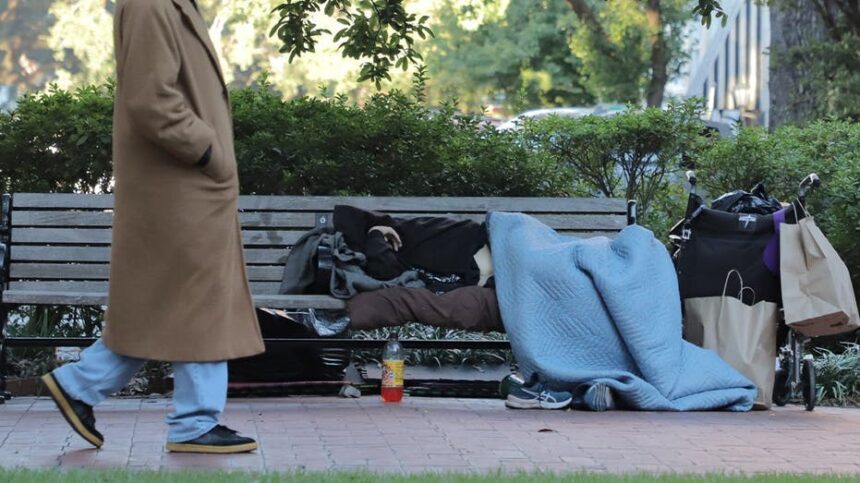
On Sept. 16, the First Circuit Court of Appeals cleared the way for the Department of Housing and Urban Development (HUD) to move forward with desperately needed reforms to the nations homelessness system.
After months of litigation by the Homeless Industrial Complex to repeatedly block these reforms, the decision allows HUD to redefine success and fund the programs that generate the greatest success in moving the homeless toward recovery, restoration and self-sufficiency.
And not a moment too soon.
TRUMP WANTS TO HELP 146,000 MENTALLY ILL WHO ARE HOMELESS. DEMOCRATS WANT TO STOP HIM
For more than a decade, federal homelessness policy has centered heavily on while the measures used to define and count homelessness have often obscured important differences between who is counted as homeless and who is being served through homelessness programs.
Success will now be measured by whether people are getting better: recovering, working, reconnecting and reclaiming their lives.
Getting here required that HUD officials confront a series of gimmicks that helped sustain the old system â promises, definitions and measures of success that painted a very different picture than what was happening on Americas streets.
SEATTLE MAYOR SAYS SOBRIETY WON’T BE REQUIRED AT NEW HOMELESS SHELTER
The first gimmick was in 2013 when President Barack Obama declared Housing First the predominant federal approach, promising to end homelessness in a decade by prioritizing permanent housing placement without requiring treatment, sobriety or other preconditions.
The promised end never came. By 2025, despite a 151% increase in , homelessness surged 27% and chronic homelessness by 81% â reaching the highest levels ever recorded in our nations history.
The problem was that we defined success as housing placements and system growth rather than recovery, self-sufficiency and restored lives.
Spending soared, the system expanded and homelessness grew with it.
That brings us to gimmick No. 2: housing people and then removing them from the homelessness count.
HUDs Point-in-Time count excludes people already living in taxpayer-funded permanent housing for the homeless even though roughly 83% of HUDs homelessness resources are devoted to housing them. That exposes a fundamental contradiction: If they are no longer counted as homeless, why does the nations largest homelessness agency continue devoting the majority of its resources to housing them?
SEATTLE CLEANED UP FOR THE WORLD CUP BUT ONLY WHILE THE WORLD WAS WATCHING, COMMENTATOR SAYS
Then came another statistical sleight of hand: rapid rehousing.
HUD classified rapid rehousing as permanent housing even though its rental assistance is time-limited to 24 months. Move a family into rapid rehousing, and they disappear from the point-in-time count. Move that same family into transitional housing â which can also last up to 24 months â and they remain officially homeless.
<a href="https://foxnews.co