For nearly half a century, American policymakers have debated how to negotiate with the . The real question is whether Washington is still misdiagnosing the problem. Iran is not simply a diplomatic adversary but a regime whose strategy is built on terrorism, proxy warfare and hostility toward the United States.
Why does Washington continue to treat the regime as a negotiating partner when decades of evidence suggest it is a threat? The answer lies in a misunderstanding of its nature. Successive administrations have often analyzed Tehran as a conventional state pursuing national interests. It is not. The regime was born as an ideological project built on hostility toward America, Israel and the Western order.
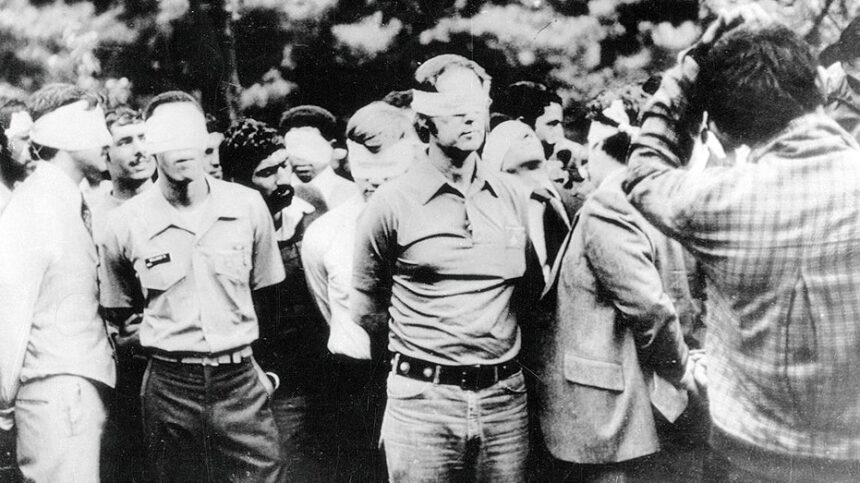
The conflict did not begin with the nuclear issue, sanctions or regional expansion. It began in 1979, when Iran was transformed from a key American ally into a revolutionary headquarters. The seizure of the U.S. Embassy in Tehran was more than a diplomatic crisis; it signaled that the new regime would derive legitimacy through permanent confrontation.
Washington’s misperception of the regime dates back to the revolution itself. Many American policymakers viewed the upheaval through the lens of anti-monarchical politics rather than Khomeinist ideology. The result was the greatest strategic loss of the Cold War: America lost a key ally and gained a radical state aligned with anti-Western forces across the .
The rebellious coalition surrounding Irans then-leader Ayatollah Ruhollah Khomeini extended beyond traditional clerics and included Islamic terrorist actors aligned with broader anti-Western movements. What emerged was not merely a new government but a transnational ideological project. Washington underestimated that transformation then and has often underestimated it since.
Khomeinism became the ideological engine of the regime, combining religious absolutism, anti-Westernism and political violence. This is why Washington has repeatedly misunderstood Tehran. The Islamic Republic is not merely a regime with whom America has policy disagreements. It views survival and confrontation as inseparable, while anti-Americanism, hostility toward Israel and the export of revolution remain central to its identity.
From the aftermath of the 1979 upheaval, Tehran began building transnational networks. The Islamic Revolutionary Guard Corps (IRGC) and later the Quds Force cultivated and directed regional Islamic terrorist movements, eventually creating the “Axis of Resistance” â a transnational evil network stretching from and Iraq to Syria and Yemen.
Hezbollah became the most successful model of Tehrans strategy, while Hamas, Palestinian Islamic Jihad, Iraqi militias and the Houthis advanced Iranian influence through proxy warfare.
This notorious network has cost American lives for decades. From Beirut to Khobar Towers to attacks on U.S. forces in Iraq and Syria, the pattern has been consistent. The regime does not need to confront America directly when it can rely on proxies and terrorist allies. Terrorism is not an occasional instrument of the regime; it is part of its strategic culture.
The to the Middle East. Assassination plots, threats against former American officials and operations against dissidents demonstrate that Tehran does not view geography as a barrier. The same hostility that drives its regional policy also drives its activities abroad.
The consequences of that misunderstanding continue to this day. The assassination of former Iranian diplomat Ali Akbar Tabatabai in Maryland in 1980 was an early warning that ideological violence could reach American soil. Over time, threats against American officials, , influence operations and networks became part of the landscape confronting American institutions.
Critics argue that American institutions have often approached the challenge through isolated rather than a broader strategic lens. The FBI, Depar