When President sits down with Chinese President Xi Jinping in the coming weeks, the world will be watching for deals on trade, Taiwan and global security. I will be watching for something much more personal: whether my father will finally be able to come home.
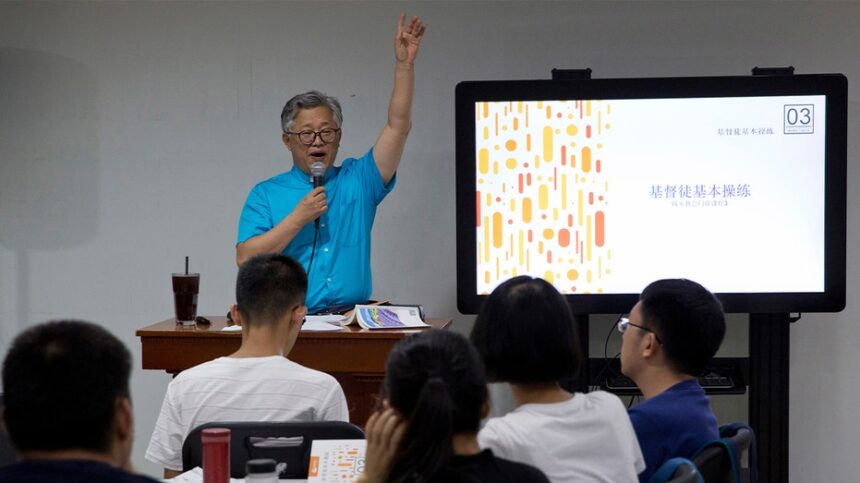
My father, founder of Zion Church in China. The church had humble beginnings â it began in 2007 with just 20 people. But my fathers passion and faith helped the church grow, which made it a target of the Chinese authorities.
Over the years, dozens of church staff members have been detained or harassed by the Chinese authorities. In 2018, the church was officially banned and all church property confiscated after church leadership refused government demands to install surveillance cameras to monitor its congregation.
Trusting in Gods sovereignty while at the same time not wanting to bring further pressure on the congregation, my father shifted the church to a hybrid model, giving online sermons and building a network of satellite locations throughout the country. Within just a few years, Zion Church was reaching 10,000 people in 40 cities, making it one of Chinas largest “house churches.”
Last October, my father and nearly 30 other Zion Church pastors and members were detained in what has been called “the most extensive crackdown against the faith in decades” Eighteen of them, including my father, remain detained, facing charges of “illegally utilizing information networks” â that is, sharing biblical teachings online.
The detained church leaders have no contact with the outside world, except for their lawyers, and even that may not last â Chinese authorities are doing everything they can do to force the lawyers off the case. Lead defense lawyer Zhang Kai, who was representing my father, had his law license revoked in January, and six other lawyers working on the case have been given six-month suspensions. The others have been harassed, intimidated and threatened.
Of particular concern, my father has health issues that are likely not being adequately treated. He has severe that has, in the past, required hospitalization. He needs ongoing, specialized medical care. But China has a documented history of denying political prisoners necessary medical care; in fact, when my father was initially detained, my grandmother tried to bring him his prescribed diabetes medication but was turned away.
My father is no criminal. Rather, he is a person of faith who has embodied compassion, kindness and caring for the needy â drawn from both Christian teachings and Chinese culture. In 2008, house churches, including Zion Church, were often the first to provide aid to those suffering after the earthquake in Sichuan. Zion Church ministers to broken marriages and depressed children and provides food to the poor. Until its space was confiscated in 2018, the church also hosted blood drives each year.
Although my father and my family have suffered greatly, this case is not just about the suffering of one person or one family. It poses a direct challenge to American values. This country traces its origins to individuals fleeing . Freedom of religion is central to who we are; it is enshrined in the First Amendment to the U.S. Constitution and was recently acknowledged in the Trump administrations National Security Strategy.
In just a few weeks, Trump will rededicate this country as “One n ation under God.” But the Chinese Community Partys escalating attack on Chinas â as well as its persecution of Muslims, Tibetan and Chinese Buddhists, Taoists and others â is a direct challenge to this oldest and most sacred American value.
Recognizing this, Ambassador Sam Brownback has described Chinas crackdown on the Christian community a “national security imperative” because, in his words, “if the worlds largest authoritarian state can eradicate without consequences, it undermines the authority of Americas founding values and global le