For most of my career, I have worked between two worlds that often misunderstand each other: Hollywood and the Church.
At Carmel Communications, my work has largely been about building bridges between them â helping leaders take culture seriously while helping artists, filmmakers, and studios recognize the spiritual hunger that still exists inside modern audiences.
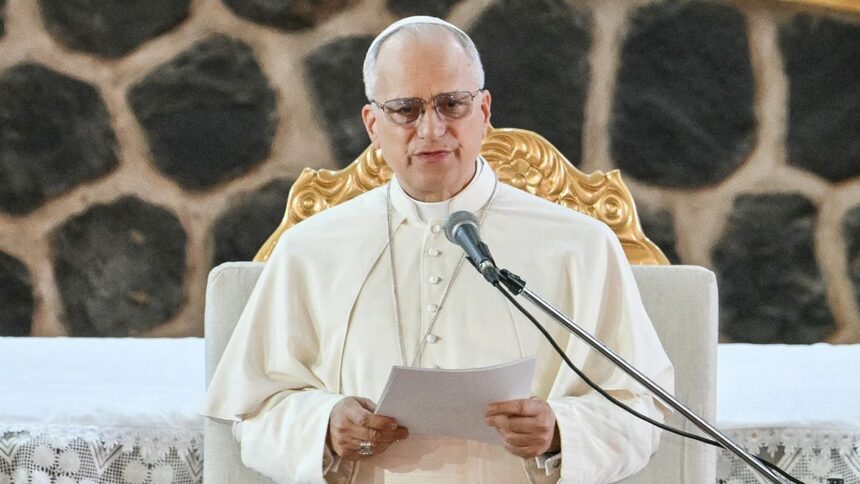
That is why s new encyclical, Magnifica Humanitas, affected me so personally.
Like many people in media, Ive spent the last few years watching AI go from something abstract and experimental to something practical and unavoidable. AI is already reshaping how stories are developed, marketed, distributed, and consumed.
Yet as I read Magnifica Humanitas, I realized the document is not ultimately about technology. It is about the human person and whether our culture still understands what human dignity means.
That question feels especially urgent in entertainment and media because storytelling has always shaped culture. Throughout my career â whether working with The Passion of the Christ, The Chosen, Sound of Freedom, Hallow, or other projects rooted in meaning and transcendence â I have seen firsthand that audiences are not simply looking for distraction. Theyre looking for stories that speak to real questions â why suffering matters, what gives life meaning, how people change, and where hope can still be found.
Long before I worked professionally in media, I understood instinctively that stories matter. I grew up in South Florida around film sets because my father drove a honeywagon truck for the Teamsters Union. Some of my earliest memories involve quietly watching crews build worlds out of lights, scripts, and . What stayed with me wasnt just how films were made, but the people making them, how exposed artists can be, and how a story can connect people who have nothing else in common.
Years later, after working closely with filmmakers, studios, ministries, and , I have only become more convinced that culture is one of the primary places where societies reveal what they value most.
That is why Pope Leos repeated phrase throughout Magnifica Humanitas â “the civilization of love” â feels so important in this moment.
The phrase was most famously developed by Pope Saint John Paul II, who believed societies cannot survive on economics, politics, or technology alone. They require a moral vision rooted in the dignity of the human person. A civilization of love is built not on domination or efficiency, but on solidarity, truth, mercy, sacrifice, and the recognition that every human being possesses inherent worth.
Pope Leo now carries that vision directly into the digital age.
What struck me most about the encyclical is how fluently it engages . It does not reject technology or condemn innovation outright. Instead, it recognizes both the possibilities and dangers unfolding simultaneously. The deeper problem isnt AI itself. Its how easily we start treating efficiency as if it matters more than people.
Hollywood has always adapted to technological change. Sound transformed cinema. Television reshaped storytelling and news. Social media and altered how audiences discover and discuss culture. Technology itself is not the problem.
What feels different about AI is how deeply it reaches into questions of authorship, creativity, credibility, and even human presence. As it begins shaping , and public discourse, the question is no longer only what it can produce, but what it may slowly train us to accept.
At the same time, audiences already seem exhausted by experiences that feel overly engineered or emotionally hollow. Ironically, the more algorithmic culture becomes, the more audiences appear drawn toward honesty, vulnerability, and transcendence.
You can see it in the kinds of projects resonating globally right now. Viewers respond to stories that feel emotionally grounded and spiritually