Americans say they want to bring back industry. President ran on reindustrialization and won. But when it comes to actual building, mining, and developing, people too often shut it down. Build, they say, just not in my backyard.
Peter Thiel put his finger on this pathology over a decade ago. “We wanted flying cars,” he wrote, “instead we got 140 characters.” His point wasn’t merely about venture capital timidity. It was about a society that stopped building physical things, retreating into digital abstraction while factories closed, supply chains migrated to , and infrastructure crumbled. Now, we are making the same mistake again, in real time, with higher stakes.
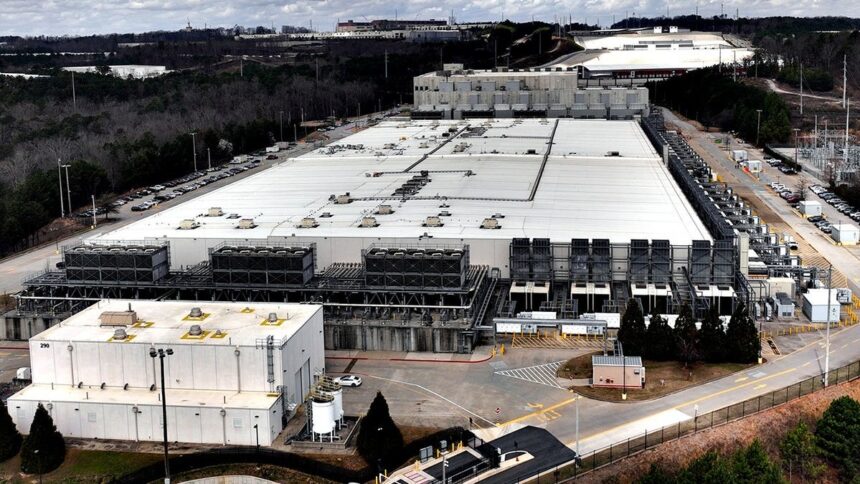
The clearest early warning is the backlash against AI data centers â the physical infrastructure of the AI revolution. A Gallup poll found that 71% of Americans oppose data centers being built in their communities, opposition now exceeding that of nuclear power plants. Local activism has already blocked or delayed $64 billion in data center projects between May 2024 and March 2025 alone.
AI-powered assistants, cancer-curing algorithms, precision farming, and long-term forecasting all sound great â we just dont want the infrastructure that makes all of this possible.
But if cant hold the line on data centersâthe most visible and economically compelling piece of the reindustrialization puzzle â they wont hold it on mines, factories, or modern industrial plants either. And the next generation may never forgive them, because NIMBYism is already present across every sector of Trump’s reindustrialization agenda.
Critical minerals mining, the foundation of every technology, electronic, and defense system America produces, faces permitting timelines of 7 to 10 years in the United States. The Resolution Copper Mine in Arizona â sitting on one of the largest copper deposits in the world â spent more than two decades in litigation before a land exchange was finally completed in March 2026. Opponents immediately promised to keep fighting.
And from , local communities frequently revolt against energy projects that power innovation. Columbia University researchers found a 111% increase in state bans on renewable energy projects in the last year alone.
Its a Catch-22. We want AI without data centers, iPhones without critical mineral mines, and energy without power plants.
Yet while were busy deciding if we like the idea of innovation more than the real thing, . The Chinese arent filing environmental impact reviews or waiting a decade for a mining permit. They control 70% of critical minerals refining for 19 of 20 strategic minerals. And according to the International Energy Agency, China’s share of global polysilicon, ingot, and wafer production will soon reach almost 95% â making the world almost completely reliant on China for the key building blocks of solar panel production. Every American project delayed is a strategic advantage handed on a silver platter to China.
The Trump administration has laid the architecture for ending this reliance and promoting reindustrializationâand it deserves credit. President Trump invoked the Defense Production Act to surge critical mineral production, took equity stakes in domestic mining and refining, rescinded burdensome NEPA environmental regulations, imposed tariffs to reshore manufacturing, established a National Energy Dominance Council to speed permitting, and revitalized (and renamed) the Office of Energy Dominance finance to augment industries vital to the national interestâincluding legacy industries like iron and steel and nascent tech like advanced battery supply chains.
As a result, 13 critical mineral projects have been fast-tracked since April 2025 and U.S. manufacturing activity recently jumped to a four-year high, a sign that the foundations of reindustrialization are taking hold.
America First is working. But it can only go so far when community opposition, acti